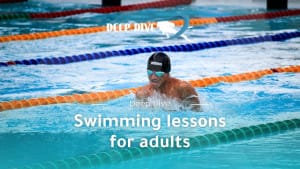
Swimming Lessons for Beginners: Swimming is one of the most popular sports and physical activities, attracting many young people, children, and women who wish to learn it. Swimming relies primarily on a person’s ability to move in the water and their skill in coordinating their muscle movements to keep the body afloat and cover distances smoothly and easily.
In this article, we will outline the most important steps, tips, and locations for learning to swim in Istanbul, featuring a well-structured, academic swimming program for beginners that enables learners to master the techniques and skills of swimming thoroughly.
The Importance of Learning to Swim for Beginners
Swimming is an official sport in the Olympic Games, which are held annually and regularly in many countries around the world. Swimming is considered a sport with significant health benefits due to its many positive effects on the body, the most important of which are:
- It strengthens most of the body's muscles, such as those in the arms, chest, and thighs
- It also plays a role in strengthening the heart muscle
- It helps improve respiratory function
- It helps the body relieve stress and relax.
- In addition to its role in weight loss by burning fat through muscle movement during swimming.
Therefore, learning to swim and free dive is a healthy and recreational activity that everyone should master. The skill of swimmers is measured by their ability to coordinate their body movements and their speed in the water, as well as their ability to swim in different positions and styles (diving and backstroke).

You can also read more about winter swimming in Istanbul in 2026
Swimming Lessons for Beginners
Despite the risks associated with swimming, learning to swim is not difficult, but it does require precision and skill. Here are some tips to help you learn the basics of swimming in a short time:
- Plunging into the water and walking along the edge of a pool or pond are among the most important steps for overcoming fear and helping beginners learn to swim.
- You can gradually move into the shallow water until your entire body, including your face, is submerged, and practice natural deep breathing until you feel your tension and fear of being in the water have subsided. Then you can move to deeper water while holding onto the pool edge and continuing to take deep breaths.
- You can now practice keeping your body afloat and taking a deep breath for 15 to 30 seconds; this exercise should be repeated without holding onto the pool edges.
- Once you have mastered floating on the water’s surface, you can begin to stretch your body and perform kicking motions underwater while keeping your body afloat on the surface.
The following video provides a practical overview of the most important steps for beginners learning to swim in Istanbul:
Swimming Lessons for Beginners in Istanbul
Swimming lessons for beginners in Istanbul at the best swimming schools for adults and children, as well as a dedicated section for women.
Phase 1 – Learning the Basics
Learning to swim relies primarily on a set of physical exercises and a number of technical skills that ensure smooth, coordinated movement in the water while maintaining a natural breathing rhythm for the swimmer.
For beginner swimmers, there are a number of basic steps to follow when starting to learn to swim, which are, in order:
- Learn to move and walk in the shallow end of the pool or in the ocean to overcome the fear and anxiety associated with moving in the water.
- The trainee can hold onto the edge of the pool and perform paddling movements against the current, which strengthens the muscles of the forearms and legs. This exercise can be repeated until you feel comfortable and relaxed while performing it.
- Now you can move to deeper water without holding onto the pool edge, push off the water several times, then stop to breathe normally until you feel comfortable, and repeat the exercise.

Stage Two – Building Beginners' Confidence
Swimming Lessons for Beginners in Istanbul: Once you’ve overcome your fear and anxiety about being in the water and can move your whole body in both shallow and deep water—whether in a pool or the ocean—you can now try the following exercises:
- Floating Exercise: Take a deep breath, hold onto the edge of the pool, and alternately extend and lift your feet upward as you try to keep your body afloat on the water’s surface. This exercise lasts 15 to 30 seconds.
- Now you can repeat the floating exercise without holding onto the pool edge, using your outstretched arms in an alternating motion to keep your body lying on the water’s surface.
- Hold onto the edge again, but this time submerge your face in the water and continue moving your feet alternately until you float on the surface of the water. This exercise takes 10 to 15 seconds.
- You can use a kickboard to help your arms extend as your body moves.
- You can perform a push-off exercise where the alternating movement of the feet, while keeping the body extended on the water’s surface, propels the body forward.
- You should coordinate the movement of your head with the movement of your hands to enable you to breathe naturally while swimming.
- Take a break in the water, then resume swimming and repeat the previous exercises until your skills improve.
Finally, we are pleased to offer you the best swimming lessons in Istanbul through Deep Dive Club, where you can learn to swim like a pro.

Frequently Asked Questions About Swimming Lessons for Beginners in Istanbul
u003cstrongu003eWhat are the best beaches in Istanbul for beginners to learn how to swim?u003c/strongu003e
Naki Beach,u003cbru003eDalyanu003cbru003eBeach, Gedabustanu003cbru003eBeach, Kilyos Beach
u003cstrongu003eAre there any indoor swimming pools for swimming lessons in Istanbul?u003c/strongu003e
Conrad Istanbul Bosphorus Hotel Pool,u003cbru003eÇırağan Palace Kempinski Pool,u003cbru003eDoubleTree by Hilton Istanbul DoubleTree by Hilton Istanbulu003cbru003eHilton Istanbul Bosphorus
u003cstrongu003eWhy is learning to swim important?u003c/strongu003e
u003cbru003eSwimming is very important because it strengthens the chest and other muscles and protects the body from many diseases, especially when swimming in the sea.