

Scuba diving in Turkey: Scuba diving is a sport that people enjoy today because it transports you from one world to another—a world with its own unique life and ecosystem—allowing you to enjoy the underwater scenery. It is also one of the most beautiful and enjoyable sports a person can practice.
An Overview of Scuba Diving
Scuba diving is one of the most beautiful sports and is loved by many people.
Diving is the sport of holding your breath for as long as possible underwater, and there are two types:
First: Free diving: This involves diving underwater for the longest duration and to the greatest depth, relying solely on one's own breath.
Second: Scuba diving: This involves diving underwater using equipment that you carry with you underwater. It allows you to stay underwater longer and dive to greater depths, but this type of diving requires experience and training to be able to dive with the equipment.
The history of scuba diving dates back to the late 18th century, after which it began to evolve until divers had access to lightweight, backpack-style equipment that helped them stay underwater for as long as possible.
This sport has gained immense popularity in Britain, and the British monarchy organized the first 15-meter diving competition in 1895.
The first diving association was established in 1901, and the sport has since been officially recognized, with its own enthusiasts and following.
Diving is a sport that a person cannot control, because the diver moves from a world where he can live freely and comfortably to a world that is foreign to him, where he has no control over his surroundings or his own actions.
Learn more about: Swimming
What safety rules must divers follow?
- Check the equipment.
- Plan the entire dive.
- Do not hold your breath.
- Only dive when you feel comfortable.
- Practice ascending.
- Apply the rule of thirds.
- Stay in shape.
- Stick with your dive buddy.
- Surface properly.
What are the requirements for scuba diving in Turkey?
Any successful endeavor must be based on certain rules and conditions in order to succeed. Diving has its own set of conditions that divers must adhere to in order to ensure a safe and comfortable dive. These conditions fall into two categories: pre-dive conditions and in-dive conditions:
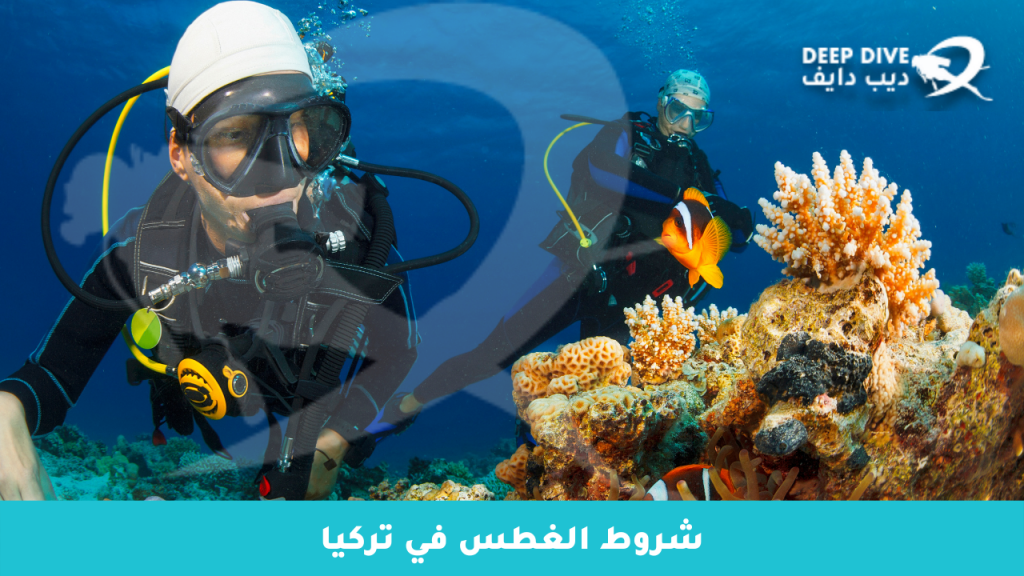
First: Pre-dive requirements:
- A diver must hold a license issued upon completion of a training course in which they learn the basics of diving and how to move underwater; this license authorizes them to dive.
- Physical fitness is a necessary requirement for diving, as divers may encounter unexpected problems; if they lack fitness, they may become a burden to their team or even injure themselves.
- A thorough and detailed study of the dive site is required so that the diver can identify its strengths and weaknesses.
- Preparing and inspecting the equipment they will bring on the dive before each dive to prevent problems caused by faulty equipment.
- Dive only within designated dive sites, as these locations are safe and have been assessed by those responsible for them.
- Dive with a team equipped with the necessary gear, as diving alone is considered suicide since you do not know what you will encounter or what unexpected problems you may face.
- Learn underwater sign language, as it is the only language understood underwater.
Second: Conditions during the dive:
- Safety stops are brief pauses taken during the descent to a depth of 5 meters; that is, every 5 meters, the diver must stop for a few minutes to allow the body to release the nitrogen that has accumulated during the dive.
- Decompression stop: This involves stopping for a few minutes while ascending from the water; that is, every 5 meters, the diver must stop for a few minutes because the pressure at depth is immense and the body absorbs a lot of nitrogen, and during ascent, the body cannot eliminate all the nitrogen in the body, which affects lung function.
- Do not ascend to the surface in one go, as this sudden ascent carries the risk of air embolism in the lungs.
- Continue breathing normally through the equipment while underwater to prevent the lungs from over-expanding.
- Monitor your equipment underwater, such as the pressure gauge and the gauge that measures the amount of oxygen in the tank.
- Pay attention to your balance in the water, as losing your balance can cause problems for your internal organs.
- Apply the rule of thirds: divide the oxygen you carry with you for the dive into three equal parts—the first third during descent, the second third during ascent, and the last third as a reserve in case of problems underwater.
- Float on your back or maintain positive buoyancy to prevent drowning while you float on the surface, and open your BCD and remove the weights from your back.
- Do not dive vertically; dive horizontally instead, as diving vertically increases the speed at which you fall through the water.
- Do not touch marine life, as it may sometimes be poisonous, and to avoid harming its ecosystem.
Learn more about: Underwater First Aid
What are the best places to go snorkeling in Istanbul?
There are many places for diving and sightseeing in Istanbul, and among the best of these are:

- The town of Kemer is located on the Mediterranean coast.
- The town of Kaş is located in the southern Mediterranean region of Turkey; it is a charming coastal tourist town with many sailboats in its small harbor.
- The city of Mersin is located in southern Turkey and overlooks the Mediterranean coast; it is known for its crystal-clear waters.
- Kalkan is located west of Antalya Province on the Mediterranean Sea and is known for its shallow waters.
- Muğla is located in southwestern Turkey and stretches along the Aegean coast.
- The city of Yalova is located in northwestern Turkey and overlooks the Sea of Marmara, surrounded by a cluster of islands, beaches, and bays.
What are the most beautiful places to go snorkeling in Turkey?
There are many charming places in Turkey that tourists visit to enjoy the breathtaking natural scenery and pursue their hobbies. Among these places are:
- The city of Kaş.
- The city of Mersin.
- The city of Mugla.
- Kuşadası.
- The city of Bodrum.
- The city of Balikesir.
- The city of Marmaris.
Learn more about: Scuba diving
Things to Avoid After Diving
There are certain things a diver should not do, such as
- Flying.
- Rappelling.
- No alcohol.
- Mountain climbing.
Is diving in Turkey safe?
Turkey is a world-class tourist destination, and for this reason, the Turkish government has focused on all tourist facilities and sites, particularly in the water sports sector. The government has designated specific areas for diving, requires divers to pass a test, issues them a diving certification, and presents it whennecessary. It has also equipped diving sites with the necessary safety measures to protect divers’ lives and revitalize tourism in Turkey.
Learn more about: Swimming
How much does scuba diving cost in Turkey?
- One-day introductory dive: $150 per dive.
- Beginner Level 1: $195. This is a one-day course that introduces participants to the basics of diving and how to use the equipment.
- Level 2: Scuba Diving (First Star) $650. A three- to four-day course where trainees learn to use scuba gear and dive to a depth of 15 meters.
- Professional Level: $850. This course teaches deep diving and first aid.
- Advanced Scuba Diving Level: First Assistant $750 for the third star after completing 50 dives.
What are the benefits of diving?
Scuba diving offers numerous health benefits, including:
- Staying in shape, as swimming tones the body, burns fat, and builds muscle mass.
- Increasing the body’s endurance and flexibility
- Healing wounds, as the oxygen in the deep sea accelerates the wound-healing process.
- Removing negative energy from the body, which helps with relaxation.
- And because swimming is the only sport that engages all muscles, it increases blood flow throughout the body, thereby helping to prevent blood clots.
Learn more about: Freediving
What should you pay attention to while diving?
There are certain things divers need to be aware of to avoid causing chronic illness, permanent disability, or even death, including:
- Increased gas pressure.
- Decompression sickness.
- Airway obstruction.
- Nitrous oxide anesthesia.
- Increased lung expansion.
- Drowning.
- Oxygen toxicity.
- Increased pressure on the ear during diving or ascent.
What equipment is used for scuba diving?
There is equipment on the diver that is used during the dive and is considered essential, namely:
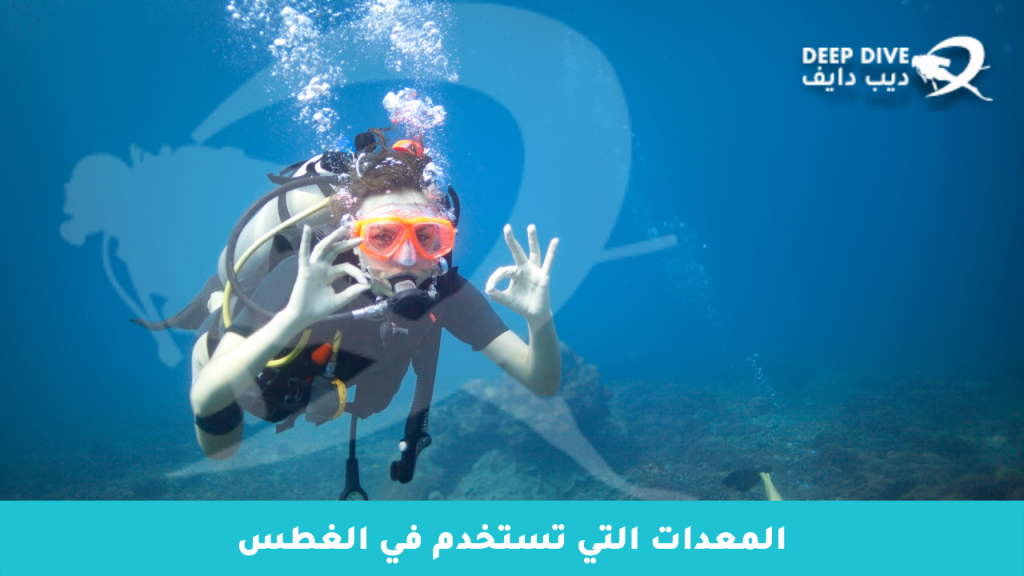
- A primary cylinder on his back.
- Alternative air source such as a rescue bottle and pressure cylinders.
- Helmet or full-face mask.
- A diving suit, such as a dry suit for temperatures ranging from 0 to 10 degrees Celsius, or a wet suit for temperatures ranging from 21 to 25 degrees Celsius.
- Diving gloves.
- A diving scarf to protect against marine animal stings.
- Diving cages for added protection against large predators.
- Fins.
- A compass to measure pressure and depth.
- A dive computer.
Learn more about: Scuba diving
Frequently Asked Questions
u003cstrongu003eWhat are the benefits of diving?u003c/strongu003e
Maintaining physical fitness, as swimming tones the body, burns fat, and builds muscle mass.u003cbru003eIt increases the body’s endurance and flexibilityu003cbru003e. It aids in wound healing, as the oxygen in the deep sea accelerates the healing process.u003cbru003eRemoving negative energy from the body, which helps with relaxation.u003cbru003eSince swimming is the only sport that engages all muscles, it increases blood flow throughout the body, thereby helping to prevent blood clots.
u003cstrongu003eWhat are the risks of diving?u003c/strongu003e
Impaired respiratory sensationu003cbru003eunder pressureu003cbru003e; changes in ambientu003cbru003epressure; coldu003cbru003eshock response; submersion of the body in water
u003cstrongu003eWhat are the diving rules in Istanbul?u003c/strongu003e
Check your equipment.u003cbru003ePlan the entire dive.u003cbru003eDo not hold your breath.u003cbru003eOnly dive when you feel comfortable.u003cbru003ePractice ascending.u003cbru003eFollow the rule of thirds.u003cbru003eStay in shape.u003cbru003eStick with your dive buddy.u003cbru003eSurface properly.
u003cstrongu003eWhat are the best places for snorkeling in Turkey?u003c/strongu003e
Kashu003cbru003e, Mersinu003cbru003e, Muglau003cbru003e, Kusadasiu003cbru003e, Bodrumu003cbru003e, Bali, Kayseriu003cbru003e, Mersinu003cbru003e, Marmaris
u003cstrongu003eWhat are the best places to go snorkeling in Istanbul?u003c/strongu003e
u003cemu003eThe city of Kemeru003c/emu003e.u003cbru003eThe city of Kaş.u003cbru003eThe city of Mersin.u003cbru003eThe city of Kalkan.u003cbru003eThe city of Muğla.u003cbru003eThe city of İvalık.
u003cstrongu003eHow much does scuba diving cost in Turkey?u003c/strongu003e
Beginner Level 1: u003cstrongu003e1,000u003c/strongu003e Turkish Lira.u003cbru003eAdvanced Level: u003cstrongu003e1,000u003c/strongu003e Turkish Lira.u003cbru003eProfessional Level: u003cstrongu003e2,000u003c/strongu003e Turkish Lira.u003cbru003eTrial Swim at Al-Sabah: u003cstrongu003e200u003c/strongu003e Turkish Lira.u003cbru003eSwimming in the pool for instructional purposes: u003cstrongu003e150u003c/strongu003e Turkish lira.
u003cstrongu003eIs diving in Turkey safe?u003c/strongu003e
Turkey is a world-class tourist destination, and for this reason, the Turkish government has focused on all tourist facilities and sites, particularly in the water sports sector. The government has designated specific areas for diving, requires divers to pass a test, issues them a diving certification, and ensures they can present it when necessary, and has equipped diving sites with the necessary safety measures to protect divers’ lives and revitalize tourism in Turkey.
What are the risks of diving?
Every activity has u003cstrongu003eits pros u003c/strongu003eand cons, and the downsides and risks of diving include:u003cbru003eimpaired sensation;u003cbru003ebreathing under pressure;u003cbru003echanges in ambient pressure;u003cbru003ecold shock response;u003cbru003eand submersion of the body in water.
Sources
sotor . reiadat . dlilturkey . deepdive . webteb


